

I’ve been going to the same hairdresser, Bindohae, for 25 years. A good friend of mine in college with great taste in everything introduced me to him and I became regular to his salon. He understood my styling needs better than I did. There was no single visit I left his salon unsatisfied for the past 25 years.
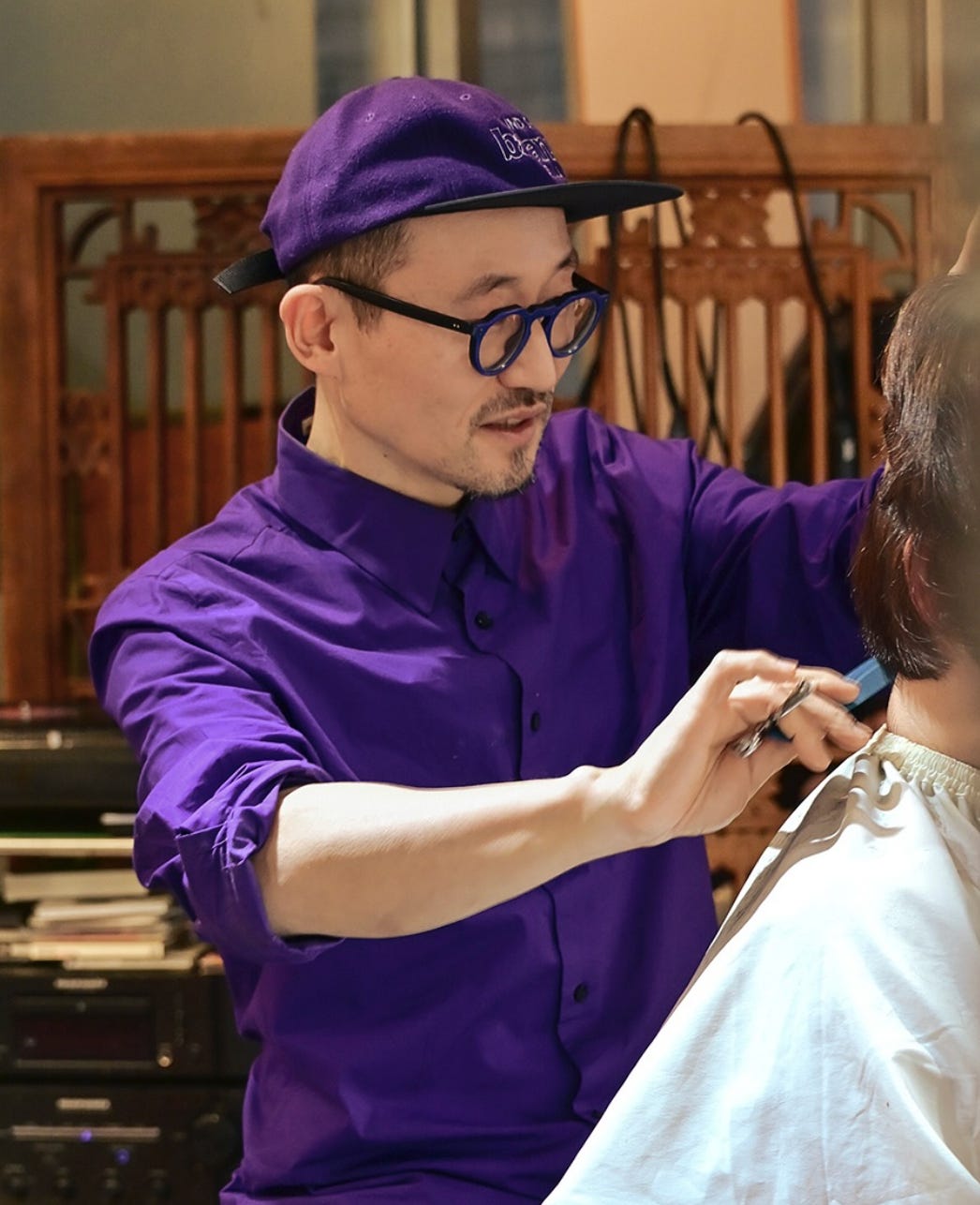
This 25 year of commitment to a single hairdresser is kind of manic because he’s in Seoul, Korea and I live in San Francisco now. Since I moved to the U.S. twenty years ago, I basically refused sourcing a new hairdresser in the U.S. and always waited for my next trip to Korea for a new haircut. The pandemic was a difficult time as a result. Because of challenges in international travels, the condition of my hair ranged from Chewbacca on a really-bad-hair day to Rapunzel on a not-so-bad hair day. My husband makes fun of me that it’s a very expensive hair cut. Thankfully, my Korea trip always involves business and other personal purposes beyond my hair cut. However, if I go back to Seoul just for my hair cut someday, that won’t surprise me.
Beyond just a great styling, what I also appreciate with my hairdresser is the conversation we have. I always leave the appointment with a food for thought. In mid-May, when I visited Korea to promote my new book <Career Incubator>, our conversation naturally flew into what “work” was all about. “What do you think work is?” I asked. He replied without hesitation, “Well, I think work is really for other people, not for ourselves.”
He went on, “I can say hairdressing is “my” work but it doesn’t exist without others. Can I say I am a hairdresser without my customers like you? Not at all. I do it for you and other customers. Can doctors do their work without their patients? Their work is for their patients. How about writers and leadership coaches like you? Does your work exist without your readers and clients? Sure, you do it for yourself, too, but you can’t deny that your work is for your readers and clients first.”
That answer genuinely caught me off guard. I’ve been thinking about everything about work from various perspectives in the past three years since I started writing <The Placeholder> in 2024. Yet, I have to admit my exploration about work focused on the “self”: What do “I” do? What does it do for “me”? Or what is in it for “myself”?
Work is Relational and Altruistic
My hairdresser was so right. After leaving his salon with a fresh hairdo, I couldn’t stop thinking about the relational and altruistic aspects of work. Are there any work that is entirely for oneself? I couldn’t think of any. Most works we do are for the benefit of others. (If you can name one profession that’s for entirely oneself, please let me know in the comment!)
If you ask people around you “What do you think work is?”, most answers sound like this:
“It’s a means to make living for myself and support my loved ones.”
“It’s about making money by doing what I am good at.”
“It’s a way to actualize my potential.”
“It’s for me to make my dream come true.”
“It’s for me to create a meaningful impact in the world.”
There is nothing wrong with this self-centered notion about work. Unless work meets our personal needs, we aren’t motivated to do it. However, we are completely mistaken if we forget that our work is also for the benefit of others. This relational and altruistic perspective about work offers an explanation why we often suffer from meaninglessness and emptiness of work. When we lose the sight of this perspective of work and think it’s entirely for ourselves, we often end up facing the infamous question, “What is this all about?”
This was true in many stories I discovered while interviewing for my books, <The Placeholder> and <Career Incubator>. Amit had a successful career in the corporate finance at one of the leading tech companies. Yet, internally, he started noticing conflicts. What used to matter to him—the brand name of the workplace, the big bold missions to change the world, and the financial reward that came with it—no longer did. He grew uneasy with his work and felt lost. The fundamental question he faced was “What do I work for?” He was looking for an answer beyond for himself and his family.
While he was still searching for this answer, he started playing a pickleball. He truly appreciated pickleball not only as a great workout but also as a “social fitness” that enabled him to meet new people so easily and connect with them authentically. On the court, it didn’t matter what your profession, race, age, or social status was. He played with people from all walks of life—a retiree to a professor, an electrician, a karate studio owner, a librarian, etc. People were able to connect with one another simply by throwing their bodies around.
So when he noticed that there were not enough indoor pickleball courts in the winter in Pittsburgh, he wanted to solve the problem immediately. This wasn’t just for himself but for his pickleball community. He felt more energized with this initiative than anything else. Through this one experiment, he got clarity that he wanted to work on something that elevates the health of a community.
Who is Your Work For?
“Well, he could work on the health of a community now because he’s got enough!” That’s a commonly expected argument to the relational and altruistic aspect of work. But I’ve seen cases that challenged that argument over and over through my research and interviews in the process of writing my books, too. In the Netflix documentary, <Working: What We Do All Day>, a young black woman in Mississippi chooses a job to take care of senior citizens, even though that job pays her $9 per hour, compared to the other job at a meat processing factory paid $15. Why? Because she wants to learn how to run a nursing home for her sick and old relatives in the future. The work that cares for elders was much more meaningful to her than anything else.
Interviewing people who were able to create their own Noble Work, it was coherent that they found their work meaningful when they were clearly aware of whom they were relating to and working for. This clarity is essential to find direction with our work as well as life, as shown in the note Steve Jobs left himself on his iPad below, about a year before he died.
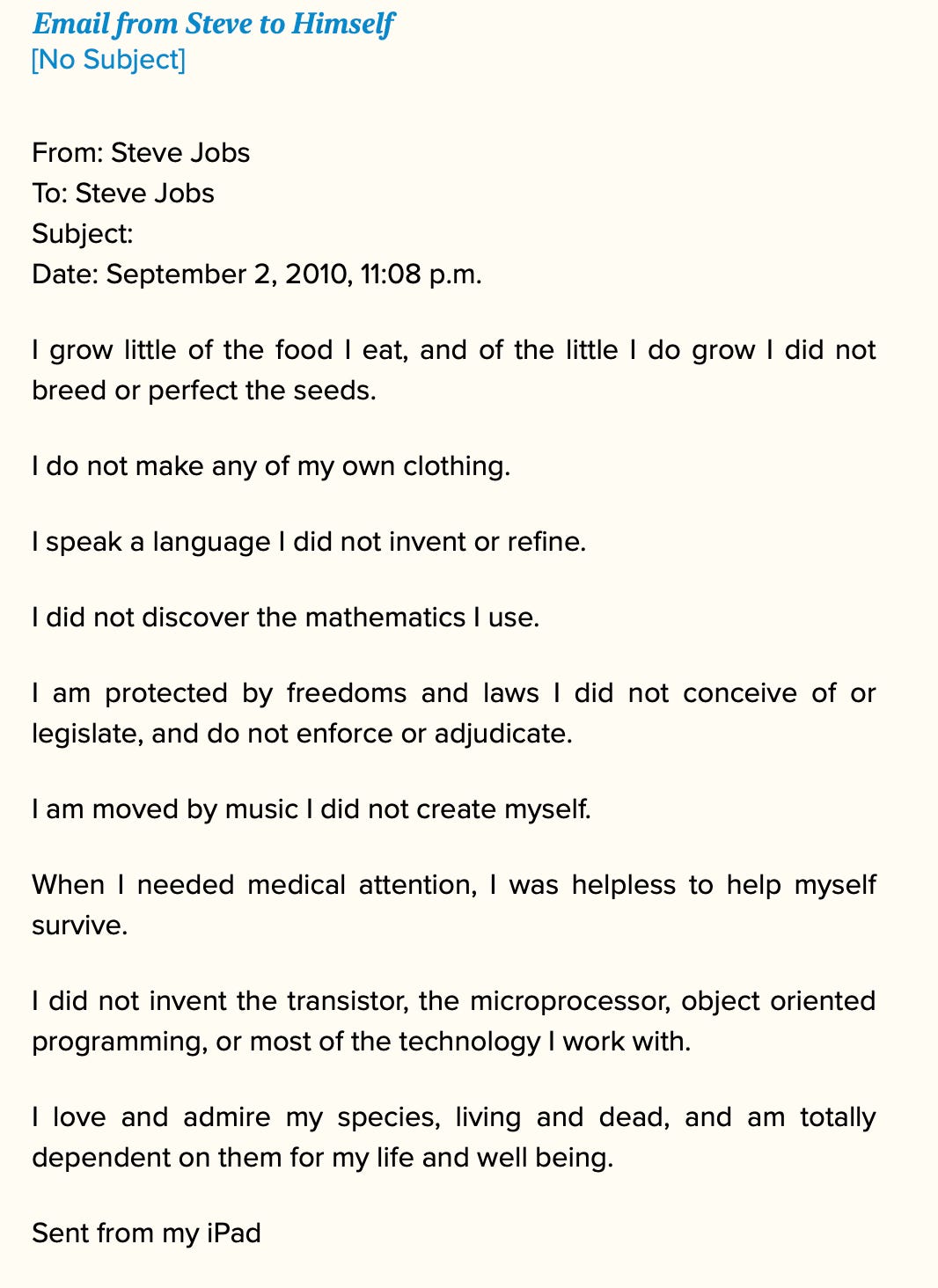
There is nothing we can do alone in life. Likewise, there is no work we do just for ourselves. As we’re benefiting from so many people’s work, we ought to think about how we’re benefiting them through our work. It doesn’t have to be an impressive achievement like that of Steve Jobs. What he wanted us to think about was simple: “Do you know how interdependent we all are? If so, do something wonderful for others in the best way you can.”
What kept me going back to my hairdresser for 25 years was because I knew it wasn’t just a transaction of money for service. Of course, he offers one of the highest quality services but there is always something more ineffable in the way he works. He always does his best to make something wonderful for me. He cares for his customers and I feel that deep care.
Looking back at my moment of truth ten years ago, what I was missing in my work was this relational purposefulness. Now with my work at People+Culture, there is so much more clarity for who my work is: people and organizations that want to move from confusion and effort to aligned work, meaningful impact, and sustainable growth. This clarity makes everything about this work much less stressful, although there are so many challenges in doing this work. And when it gets hard, I am not too worried because I know I am held by so many helping hands around me in my life.
For Your Reflection —
If you feel disinterested or unmotivated with your work lately, think about the relational and altruistic aspects about your work. Who’s involved and who does your work serve at the end of the day?